Archives
- 2026-07
- 2026-06
- 2026-05
- 2026-04
- 2026-03
- 2026-02
- 2026-01
- 2025-12
- 2025-11
- 2025-10
- 2025-09
- 2025-03
- 2025-02
- 2025-01
- 2024-12
- 2024-11
- 2024-10
- 2024-09
- 2024-08
- 2024-07
- 2024-06
- 2024-05
- 2024-04
- 2024-03
- 2024-02
- 2024-01
- 2023-12
- 2023-11
- 2023-10
- 2023-09
- 2023-08
- 2023-06
- 2023-05
- 2023-04
- 2023-03
- 2023-02
- 2023-01
- 2022-12
- 2022-11
- 2022-10
- 2022-09
- 2022-08
- 2022-07
- 2022-06
- 2022-05
- 2022-04
- 2022-03
- 2022-02
- 2022-01
- 2021-12
- 2021-11
- 2021-10
- 2021-09
- 2021-08
- 2021-07
- 2021-06
- 2021-05
- 2021-04
- 2021-03
- 2021-02
- 2021-01
- 2020-12
- 2020-11
- 2020-10
- 2020-09
- 2020-08
- 2020-07
- 2020-06
- 2020-05
- 2020-04
- 2020-03
- 2020-02
- 2020-01
- 2019-12
- 2019-11
- 2019-10
- 2019-09
- 2019-08
- 2019-07
- 2019-06
- 2019-05
- 2019-04
- 2018-07
-
br Ultrasonic pretreatment of substrates Substrate pretreatm
2021-01-06
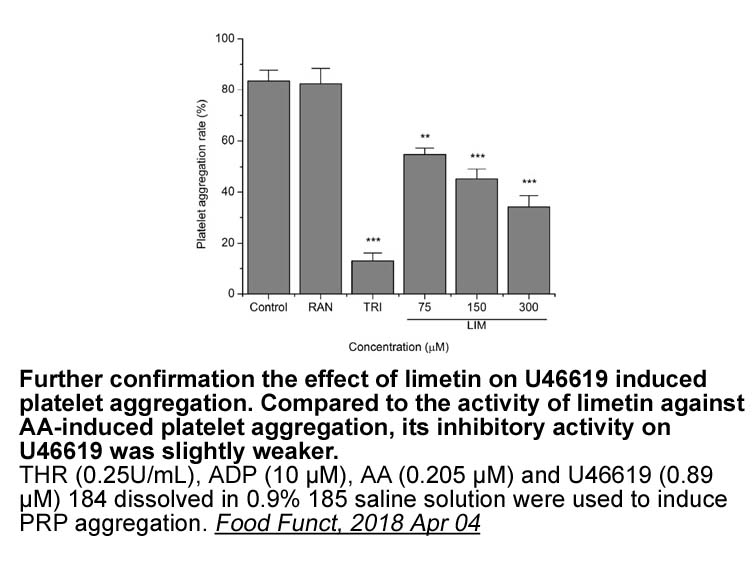
Ultrasonic pretreatment of substrates Substrate pretreatment is widely used in the biofuel, textile and food industries since the substrates are always difficult to degrade. During some enzymatic hydrolysis reactions, the protective layer of the substrate impedes the reaction. Ultrasonic treatmen
-
LY2584702 dihydroxycholesterol OHC was recently identified
2021-01-06
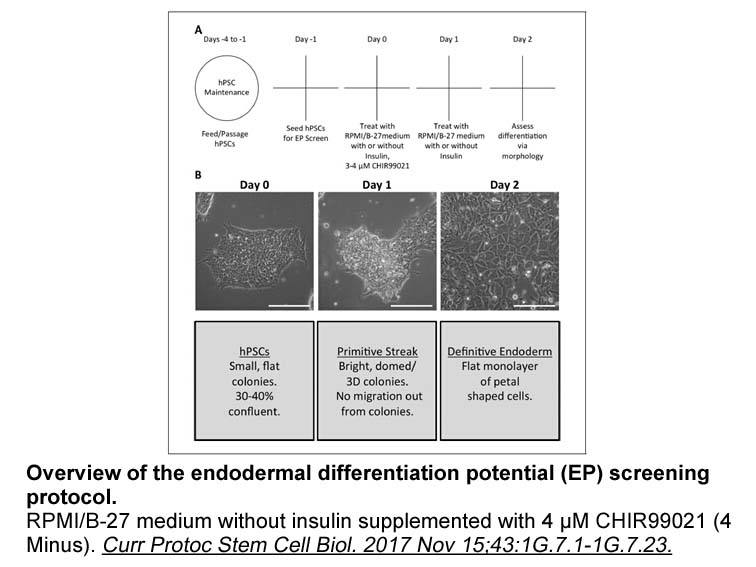
7α,25-dihydroxycholesterol (7α,25-OHC) was recently identified by classic analytical methods as a high-affinity ligand for EBI2 (Hannedouche et al., 2011; Liu et al., 2011). 7α,25-OHC was previously identified as an intermediate in the alternate pathway of hepatic bile LY2584702 synthesis (Russell,
-
br Materials and methods br
2021-01-06
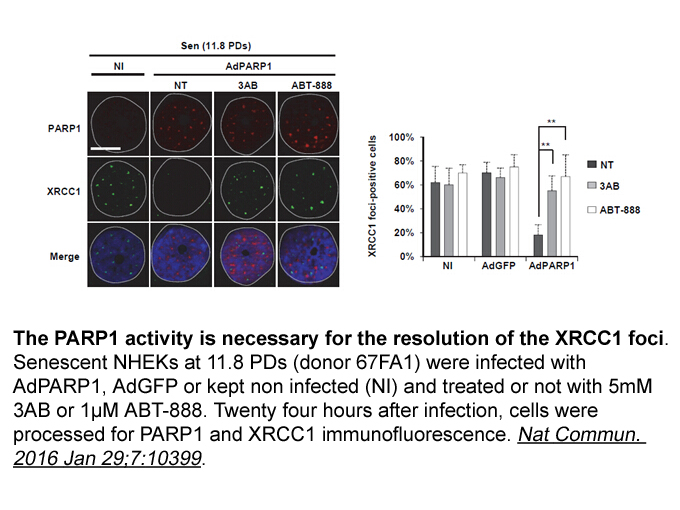
Materials and methods Results Discussion The investigation of oxysterols is highly complex and challenging, arising not only from the large number of molecules in this family, but also due to their low abundance in biological systems compared to cholesterol and their susceptibility for auto
-
Through an unknown mechanism RING
2021-01-06
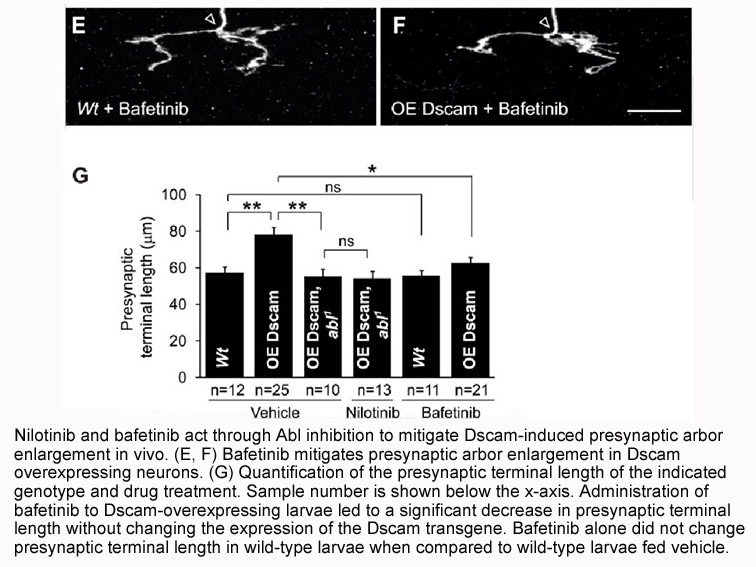
Through an unknown mechanism, RING/Ubox-type E3 dimers and the N-terminal tail have been shown to function as a modulator of full E3 ubiquitin ligase activity [27]. LRSAM1 promotes a significant enhancement in the formation of the high-molecular-weight products or E3 activity when the RING domain is
-
Recent studies have also uncovered
2021-01-06
Recent studies have also uncovered additional roles for E2 enzymes and E2~Ub conjugates in modulating the activity of deubiquitinating enzymes (DUBs), such as OTUB1 (Juang et al., 2012, Wiener et al., 2013, Wiener et al., 2012). Interestingly, OTUB1 has also been shown to associate and modulate the
-
br Acknowledgments This work was supported by
2021-01-06
Acknowledgments This work was supported by a grant from the National Center for GM Crops (PJ008152) of the Next Generation BioGreen 21 Program funded by the Rural Development Administration, Republic of Korea, to W.T.K. Introduction Ubiquitin (Ub) has been considered as one of the most import
-
gamma secretase inhibitor The intracellular redox situation
2021-01-06
The intracellular redox situation of MC3T3-E1 gamma secretase inhibitor after exposure with fluoride has been investigated and results revealed that the generation of ROS increased at a concentration-dependent manner, which indicated that NaF induced oxidative stress damage in MC3T3-E1 cells. Fluor
-
br Materials and methods br Results br Discussion Plg
2021-01-06
Materials and methods Results Discussion Plg plays important roles in various physiological processes, such as fibrinolysis, proteolysis, cell migration, differentiation, tissue remodeling, and inflammation [6], [7], [8]. We herein found that Plg deficiency enhanced insulin secretion, and w
-
Addressing whether impaired activation of D and D receptors
2021-01-06
Addressing whether impaired activation of D1 and D2 receptors regulates memory capacity is relevant for all human pathologies that lead to reduced activation of these W146 pathways, such as ageing [39], certain genetic polymorphisms [40] and neurodegenerative disorders. In this study, we have tested
-
br Conclusion br Conflict of interest br Introduction The se
2021-01-06
Conclusion Conflict of interest Introduction The sexual exploitation and internal trafficking of British children within the UK has received growing public and policy attention in recent years. This has largely been in response to a number of high profile police investigations into cases in
-
br Molecular modeling simulation study Molecular modeling
2021-01-06
Molecular modeling simulation study Molecular modeling study was performed through docking of the test compounds into the binding site of hDHFR enzyme using Discovery Studio 2.5 software. Computational docking is an algorithm designed to determine the suitable position and the orientation of the
-
This work is inspired by the systematic work
2021-01-05
This work is inspired by the systematic work of Coutinho and co-workers, who obtained several very useful experimental data, which will be also used in our work, and applied the CPA equation of state for the modeling of systems relevant to the production of biodiesel [8], [9], [10], [11], [12], [13]
-
br Chk and Chk mediated
2021-01-05
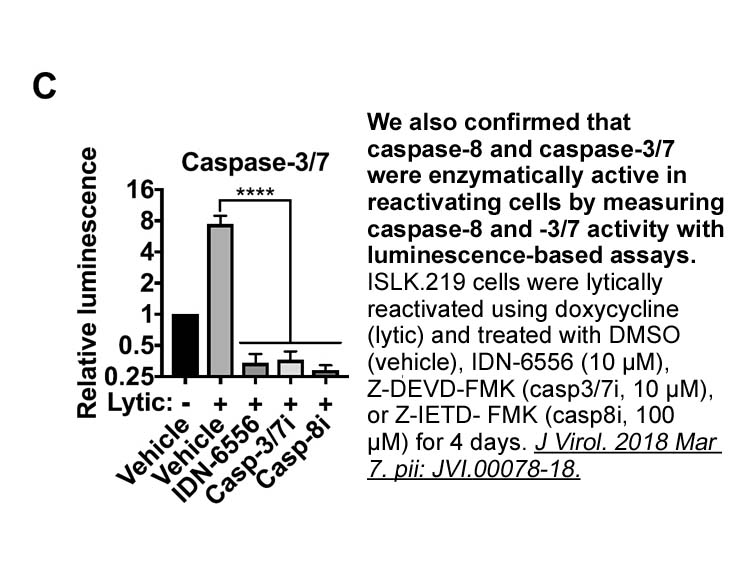
Chk 1 and Chk 2 mediated signaling act as a barrier to tumorigenesis It was hypothesized recently that early events during tumorigenesis, such as the overexpression of oncogenes, lead to a DNA-damage response which, in turn halts tumor progression [44], [45], [46]. The DNA-damage response is prop
-
Fujimoto et al pointed out
2021-01-05
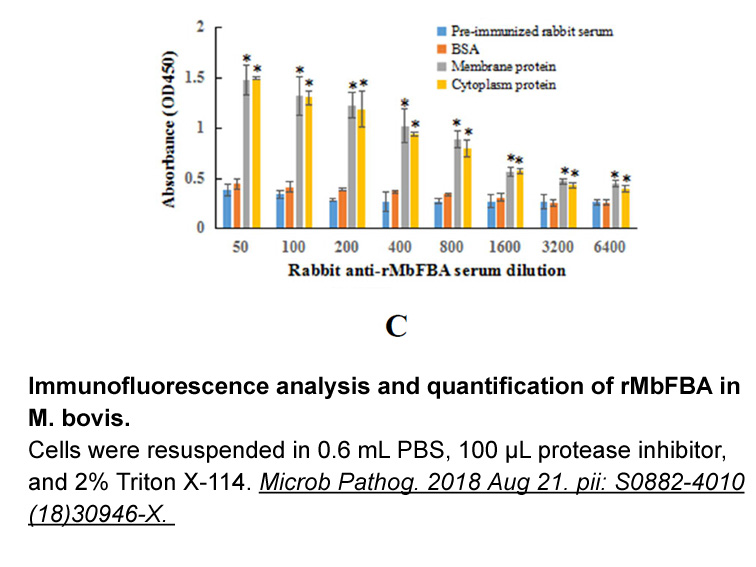
Fujimoto et al. pointed out that RPN2 knockout alleviated the resistance of GC Marimastat receptor (MKN74 and KATO III) to docetaxel and DDP [23]. Yuan et al. demonstrated that the depletion of RPN2 resulted in the reduction in resistance of GC cells to drugs such as irinotecan, docetaxel, doxorubi
-
In general we observed that the enolase gene with
2021-01-05

In general, we observed that the enolase gene with highest mRNA levels was TVAG_043500, under all three iron concentration conditions. mRNA levels for this gene are very similar in normal and iron rich cultures (73.9 and 78.1 fold change, respectively), and higher in iron depleted cultures (118.3 fo
16012 records 740/1068 page Previous Next First page 上5页 736737738739740 下5页 Last page